Saturday, 21 February 2026


is getting the shiny 4K disc treatment

Paul McGann's outing as the Eighth Doctor was given short shrift when it was released in 1996. The television movie was a co-production with Universal Studios in the hope of catching a US and global audience, allowing the BBC's flagship science fiction show to be rebooted in a more spectacular fashion.

Sound familiar? The television movie presaged the show's eventual reboot under Russell T Davies years later, and in more ways than one.

In a prescient move, we reassessed the Eighth Doctor's main adventure only a week or so ago and now the BBC has announced that it will be getting a 4K spruce up and be available in the format soon. Hosting a tonne of new features and the original UK and US release versions, this will be the definitive release for this much-overlooked episode of the Time Lord's adventures.

Sunday, 6 January 2019

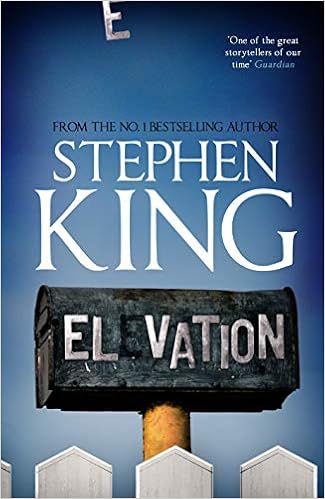
ELEVATION by Stephen King


elevation by stephen kingWe have reached the point where anything that Stephen King writes will be published. I generally don't have a problem with that, but this 'novella' is a thin tome with what looks suspiciously like double spacing. If it took me two hours to read then I'm surprised.

It also felt like some reheated old ideas thrown together. The central conceit of Thinner was a man who got thinner no matter what he did. The central conceit here is that a man is getting lighter no matter what he does. Gravity is losing its hold. Does this cause anyone great concern? No not really.

The main concern is that there's a married lesbian couple running a restaurant and people don't approve. The local seasonal running race should take care of that. Really? In Trump's America, one photograph is all it takes to change conservative views?

It is a slight tale that doesn't last long or think deep, both of which are surprising for King.

That said, the man does know how to write and you breeze through it pleasurably enough, though by the end of the this snack you're left far from satisfied.


Sunday, 25 March 2018

BUFFY THE VAMPIRE SLAYER FAQ


We've been a bit sniffy in the past about the FAQ books because they don't answer frequently asked questions and they don't address the subtitle of "everything that's left to know" about their subjects, but it's time to just accept that this is the marketing line and nothing is going to change that.

So here it is, the latest potted history of Buffy the Vampire Slayer, one of television's finest fantasy shows, with chapters on the major characters, each season's plots, the 'big bads', the spin off show ANGEL and more. 

It's written by people who clearly know the show and clearly love the show and contains interviews new and old, but it is not (as has been the case with the other books in the series that we have seen) revelatory. There is little here that the hardcore fan won't already know and the there is too much here for anyone who is going into the show for the first time. There are spoilers indeed here.

That said, the book succeeds in its primary function, which is to remind you just how wonderful BUFFY VAMPIRE SLAYER was and, after reading it, you'll be bringing down those DVDs and plunging back into the world of the Slayerettes once again.

Friday, 3 November 2017

The Art of Horror Movies - An illustrated history


Of all the genres of movies there are, none has produced movie posters that are as colourful and lurid as those created to sell the humble horror movie. In fact, the more humble the horror movie, the more lurid the cover. Some of history's greatest movie posters are reprinted in this sumptuous coffee table book that spans from the earliest silents right through to Resident Evils and Underworlds that were around and about at the cinema in recent times.

Considering the length of the publishing process, no book can ever hope to be completely up to date, but considering that the art of the movie poster is dying on its feet with the advent of photoshop and video screen advertising, this may the last book to celebrate the art of the nasty poster for nasty movies.


It's not just filled with posters for the likes of Nosferatu, The Curse of the Werewolf and (ahem) The Human Centipede, there are some original pieces that celebrate the likes of The Masque of the Red Death, The Mummy and Pan's Labyrinth.

There are words as well, though they rarely amount to half the page and don't really tell any hardcore horror or movie poster fan anything that they didn't already know about or didn't really need to know about. The words, though, are not what books like this are about. The pictures are the thing and it's unlikely that you're going to find a more comprehensive and visually appealing collection of horror movie poster art anywhere.

Horror art is always going to be something of an acquired taste and certainly this book's audience is going to be limited by the subject matter, but if you've acquired that taste then there is plenty here to enjoy.

So, with Halloween just over and Christmas on the horizon, treat the gore-lover in your life to this hefty tome of bright, black and red-drenched cinematic horror delights, the like of which we are unlikely to see again.


Saturday, 26 August 2017

At the centre of the universe, on the planet Midworld, lies the Dark Tower. It alone keeps the darkness and the monsters from invading all of the worlds in known space. The Man in Black, evils sorceror Walter, wants to destroy the tower, allowing the demons in and harnessing them to make him ruler of everything. To this end, he is kidnapping children from Earth who have mental powers known as 'shining'. These powers can be harnessed to destroy the tower, but the latest unwilling recruit falls into the hands of Roland Deschain, the last of the noble gunfighters and a man who has dedicated his life to killing the Man in Black.

THE DARK TOWER is Stephen King's magnum opus, a tale that spans several volumes and tries to combine many of his earlier works into some sort of cohesive narrative. The King Cinematic Universe, if you will. Considering the scope and scale of the source material, it was never going to be easy to pare it down into something that would satisfy as a single movie. An epic TV series would have been much more like it. However, what we have is the movie and it has been a long, hard road getting to the point where there is something on the screen bearing the name THE DARK TOWER.

Before we go any further, it is worth pointing out that the film is not bad. It's not going to rock anyone's universe, but it is far from the train wreck that some reviews would have you believe. Of course, if you are invested in the source works then having it all squashed down into this one film, and with only a 95 minute running time at that, would probably have been unacceptable no matter how good it was. That it is entertaining enough without ever being anything even remotely special was never going to be good enough. There is quite clearly a whole heap of backstory that a single flashback to a previous meeting between Roland and Walter cannot ever hope to cover.

Idris Elba is perfect casting as gunslinger Roland, being immediately tough, laconic and honourable without having to do anything to prove those things. His presence immediately screams 'hero' whilst the script tries to make him a flawed and reluctant one, without much success. Ranged against him is Matthew McConaughey's Walter, a magician who wouldn't be out of place on a Vegas stage, but who gets to do some nasty stuff to people along the way. Considering the power that he has, it is hard to see why he keeps sending incompetent underlings to do the things that he could achieve easily. The fact that his power is so immense makes the climactic showdown between the two somewhat anticlimactic, despite Roland's assault on his New York stronghold being filled with some pretty good action licks. In fact, whenever Roland gets the guns out, the film improves immensely.

Despite coming originally from the pen of Stephen King, there is relatively little horror on show. A couple of CGI demons are dealt with fairly quickly, Walter's army are rat creatures that wear ill-fitting human skins and the wizard doesn't mind torturing kids to destroy the tower that stands in his way, but this film is more interested in being a fantasy actioner. There are some vaguely amusing fish out of water antics when Roland crosses over to modern day New York from a post-apocalypse Midworld and Elba manages these with perfect timing, but there is a plot to get through and character development takes a big back seat to that. The rivalry and hatred between Roland and Walter is barely explored, so much of the impact is lost.

The film looks good and the direction is straightforward enough not to get in the way, but it also adds nothing in the way of visual excitement. A few sly references to other King works (Oh, there's It or Christine) won't cut it.

Sure to disappoint King fans and especially fans of his longest work, THE DARK TOWER is an OK time passer that never quite rises to the challenge of what it ought to have been.

Sunday, 17 January 2016

Game of Thrones journals - The second coming.

So, you're innocently going about your business when you are struck by the greatest story idea ever (TM). You know that you're never going to remember it, so you reach into your backpack/ briefcase/ handbag (delete as appropriate), whip out your pen and your trusty journal and jot it down.

That's what should happen, but let's be honest, what really happens is you scrabble around looking for anything that you can write with and write on. Well, one of those problems has been solved with style with the arrival of these new Game of Thrones journals.

The first four in the series were embossed with the crests of the Great Houses, but this second set has gone for other symbols that are hugely important in the world of Westeros in George RR Martin's fantasy behemoth. The first is the Iron Throne, the thing that all the fuss is about and that everyone's fighting over in the first place. Next up is the seal of the King's Hand, bestowed on the most trusted advisor to the King and therefore making them the second most powerful person in the whole of the political mess. Following that is Night's Watch, denoted by the bulk of the giant wall that they defend against the Winter and the terrible things that it brings with them.  Last, but far from least, is Valar Morghulis, represented by the most famous white door in the whole of written fantasy.

That's all well and good, but a notebook's a notebook's a notebook I hear you say.

I don't hear you say that? I could have sworn I heard you say that. Well, these aren't your common or garden notebooks. The covers are not just attractively embossed in silver and gold (and yes, white) colour on faux leather jackets, but they come with inner covers bearing scenes from the show itself (Tyrion graces the Hand of the King insert whilst Arya turns up in the Valar Morghulis edition.

That's not enough, you cry. My, you are a demanding bunch aren't you? OK, so how about the fact that the paper is pretty good quality, thick and lined and not likely to bleed your ink through to the next page. How about the fact that the ribbon page marker comes as standard and an elastic band holds it shut when you're not frantically writing down your own thoughts and ideas that are so much better than that George RR Martin could ever come up with (if in fact he ever comes up with anything more anyway, since he doesn't seem to be all that on time.  Just to finalise the deal, there's a nifty little document pocket at the back for you to stash useful and interesting snippets for future reference.

 Suffice to say that they're just a bit classier than your usual 99p efforts from the newsagent and might be just the thing to inspire you to George RR Martin levels of success with the most famous fantasy series on the planet, the most successful TV show on the planet and a shedful of deadlines that you just don't seem to be able to get around to meeting.

Or you can just sit there running your hands lovingly over those oh so attractive covers crooning "Who's a pretty book then?" Your choice of course.


Saturday, 20 December 2014

MODERN SCI-FI FILMS FAQ - by Tom DeMichael

Another book in the FAQ series addresses one of our favourite subjects, science fiction movies. Considering we call ourselves the Sci Fi Freak Site, that shouldn't come as any great surprise to anyone.

Also not coming as a surprise to anyone will be the reservations we have over the title and subtitle. There are still no frequently asked questions in this book and we still don't know what they mean by 'all that's left to know about...', in this case time travel, alien, robot and out-of-this-world movies since 1970.

With this book, though, we also have larger reservations about the content than the previous entries we've tried (Doctor Who and Stephen King Films). It's not that it's hard to read; the writer's style is clean and easy to read and doesn't distract from the content at all. It's the construction that we don't understand.

Each film starts with a synopsis and then has some afterwords, analysis, box office and anecdotes. Nothing wrong with that, but it's the amount of room devoted to each that confuses. Take the entry for INCEPTION for example - the plot synopsis runs to seven pages whilst the rest runs to two. That seems to us to be entirely the wrong way around. Admittedly, INCEPTION is a film with a dense and twisting plot, but does anyone really need every twist and turn to be laid out for them? And that's the problem. If you've seen (and loved in most cases) the films then you'll know them well enough to not need to read a detailed synopsis of what happens. If you're going to see the film then you're not going to want to know all the twists and plot spoilers that are included. We found ourselves skipping the synopses altogether and reading only the 'afterwords'. Since these are the smaller sections and seemingly obsessed with box office receipts and not a lot else, the 380 page count gets a lot, lot less.

More interesting are the opening section on the literary roots of the genre (i.e. some important sci fi writers whose work has been recently adapted), science fiction movie spaceships and notable sci fi movie personages. Since these are not simply regurgitating plots, they have more interest.

It's hard to know who this book can be aimed that who won't be disappointed by it, and that's a big problem.

Sunday, 7 December 2014

BATTLESTAR GALACTICA VAULT by Paul Ruditis

BATTLESTAR GALACTICA is one of the most lauded television shows of recent years. Notice that we left out the qualifier 'science fiction' in that? That's because the redefined version of a camp 70's STAR WARS wannabe was a genuine phenomenon that crossed the critical divide from genre into the mainstream. That might not be such a big thing nowadays with the success of the likes of GAME OF THRONES and other HBO shows, but it was big at the time.

So, if you were one of the people who loved the show (and if not, why not?) then you could do a lot worse than getting your hands on this lavishly illustrated book that starts with that camp 70's wannabe and goes right through to the doomed spin-off CAPRICA and the tv movies that tried to extend the magic.

There's only a couple of hours' reading time here and the devoted fan won't learn a lot that they didn't already know, but the words aren't what books like this are all about. The production art and set designs are crammed onto every page and there's more than enough to satisfy even the most hardened Galactica buff. And just in case you weren't convinced that this is all about the images, there are a couple of envelopes inside the front and back cover stuffed with pull out images like Ralph McQuarrie's poster, comparisons of ships of the fleet and the development of the cylon warrior.

The design of the book and the gatefold cover make the £20 cover price seem like a bargain. It's coming up to Christmas, so if you have a frakkin' Galactica fan in your life your present problems could just have been solved.

Thursday, 9 October 2014

Know Your Sci Fi Computers?

So you think that you know your science fiction computers? Sure which ones you could trust in a pinch? Well, follow the link below to a pretty neat info graphic (no, we don't know what that means either, but the kids do) that will tell you all you need to know about trusting those pesky bunches of isolinear logic circuits.

Fictional Computers Good vs Evil

Wednesday, 1 October 2014

SCI-FI CHRONICLES - Aurum Press - Out 2nd October

It's not often that we open something that we've been sent to review and let out very unmanly fanboy squeals, but that is exactly what happened when we opened the packaging on SCI-FI CHRONICLES. Our very first impression was 'Oh my God, it's beautiful'. The cover is a lush patterned black with a rendering of Hal 9000's eye lens and some very shiny lettering that just isn't done justice by the image alongside.

But, the beauty of this book doesn't just stop at the cover. It is lavishly illustrated throughout with glorious colour images. They're not huge, but there are so many of them. Each entry is illustrated with small icon images with some of the larger subjects getting two or four pages devoted purely to the pictures.

You need a lot of pages to get all of that onto and SCI-FI CHRONICLES has more than 570 of them (though admittedly 40 of those are dedicated to the index and the credits.

With so much information now readily available on our electronic devices at the swipe of a finger, encyclopedias like this one are much harder to come by, so it's to Aurum's credit that they are willing to even produce the book, let alone do such a good job on it. There are 27 listed contributors, all of whom seem to have a passion for the subject.

And it's a wide-ranging subject too, since the book doesn't restrict itself to just one medium. There are landmark books, films, TV shows, comics, video games and even characters and personalities all contained within. Isaac Asimov shares space with The Day The Earth Stood Still and Jack Kirby. Steven Spielberg jostles elbows with King Kong and Halo. Even with half a thousand pages, it can't be all-encompassing, but we've yet to come up with one entry that we thought ought to be featured that wasn't. The detail is more of a sketch, an introduction to each subject, but you'll know whether you're interested in finding out more about each by the time that you reach the end of the page.

It's not perfect, though, surely. Very nearly. The chronological structure makes it a little harder than necessary to find your subject of choice if you're not interested in reading it as a narrative and the index is a touch fiddly to find the main article of choice. The chronology also stops in 2009, which suggests that there has not been one single book, film, video game, graphic novel, character or creator who has emerged in the genre in the past five years. That seems a little hard to believe.

The space devoted to each entry can be a little obscure as well. Blade Runner, visually the second most influential film of all time, shares its page with the book Do Androids Dream Of Electric Sheep and mention isn't even given to the excellent video game version and the not quite so excellent KW Jeter sequels. This means that the most influential movie in the genre since Metropolis actually gets less page space that soggy submarine series Seaquest DSV!

Also, any book that states as fact that Tom Baker was the third Doctor has to lose some credibility points.

All of which is nit-picking. The fact is that we have lost hours to this book already and we've had it for less than two days. It has become our favoured reference book of choice and has pride of place on our shelves. That is seriously not bad going.

The £25 price tag might seem a little steep, but take a look inside and you'll probably fall as instantly in love as we did. Also, it's a book that you will go back to time and time again. And it's the kind of gift that your science-loving significant other would thank you for and mean it.

The lovely folks at Aurum have promised one lucky winner a copy of this book absolutely free, so trot on over to www.scififreaksite.com and take part in our giveaway.

Monday, 22 September 2014

DOCTOR WHO FAQ - All That's Left To Know About The Most Famous Time Lord In The Universe by Dave Thompson

It may have escaped your attention, but the BBC TV series DOCTOR WHO celebrated its fiftieth birthday recently. This was as good a reason for a few million more words to be written about what must be one the most written about television series of all time. What, indeed, can there be left to know?

Quibbles first - title and subtitle. This is not a book of frequently asked questions. And as for its claim that it contains 'all that's left to know' about the Doctor, well that's just nonsense. 'All that's left to know' after what?

Don't get me wrong, author Dave Thompson knows his stuff and certainly has opinions on his stuff, but there is very little here that even a semi-knowledgeable viewer like me didn't already know, or certainly couldn't have found out pretty quickly on the internet. True enough, the chapters on the Big Finish audio productions and the music inspired by Doctor Who were news to me, but then I did say that I was only semi-knowledgeable.

What this book really is, is a comprehensive overview of the show for someone who knows a little and wants to know a lot  more. This is for people who are new to the series in its modern incarnation and want to be indoctrinated in the history.

It is also, make no bones about it, for Americans. The opening chapter is entitled 'The TARDIS in America'.

It is also out of date, containing nothing of the fiftieth year's celebrations, but that's a minor point since any book like this is out of date as soon as it's printed (if it's lucky).

So, what's good about it? Well, if you don't already have an overview of the show then you could certainly do worse than this and it does cover those Big Finish audio productions and books and music as well. There's a comprehensive listing of TV episodes, audio productions, original books and even comic books featuring the 'most famous time lord in the universe'.

It's also pretty easy to read. Thompson has a clean style and isn't shy about coming forward with what he thinks. That he didn't like Adric or Mel is no surprise to any right-thinking individual, but his views on the Moffat era might not go down so well with some others.

There's an eclectic mix of illustrations (black and white) to break up the text and at 258 pages of history and opinions, there ought to be something for everyone to find of interest.

We're back, though, to that thorny question of who exactly this book is for. Completists will want it for, well, completeness, but there's very little in it to make it indispensable. Then again, after so much has been written about the show, what on earth could there be left to know?

Sunday, 10 August 2014

Joss Whedon - Geek King Of The Universe by Amy Pascale

 
Before you start worrying, this is not another long-winded speech about our love for the Geek King of the Universe that is Joss Whedon. Someone else has already got there.

Sort of.

For those who don't know (and why the hell are your reading this blog if you don't know?) Joss Whedon is a writer of TV shows, films and comic books. Up until recently, his work was known to a smallish audience who made up for their lack of huge numbers with passion.

BUFFY THE VAMPIRE SLAYER, ANGEL and FIREFLY are considered (by their fans at least) as some of the finest science fiction and fantasy shows ever put on television. They never broke into the mainstream, though, and DOLLHOUSE barely made a dent on the popular culture.

Marvel's AVENGERS ASSEMBLE, however, really put the man on the map by becoming one of the biggest moneymaking movies of all time. Taking time off to relax from making that blockbuster, he made a film version of Shakespeare's MUCH ADO ABOUT NOTHING in his house!

We at the Sci Fi Freak Site have always loved Joss Whedon, so it was no hardship to read this biography. Amy Pascale's chronological retelling is carried out in a clean and clear style that never puts the writing ahead of the story that it is telling. The author certainly knows her subject, with input from Whedon's family, friends and co-workers on almost all subjects, whether it is his work, his Shakespeare readings with friends, his support of the writers' union or his rocky relationships with various TV companies and movie producers. Whilst his private life is kept private (he's married, he has children, that's about all you're getting), his professional life is laid bare and whilst his early life might not raise too much interest, the moment that we get into the stuff we really want to know about, the book becomes unputdownable.

If there is a negative to be found then it is that a book about a man who is described by almost everyone as the wittiest man they have ever met could have done with a bit more itself.

If you're interested in Joss Whedon's work, then this biography gives a great insight into his history and his methods.

It's available now.

Sunday, 3 August 2014

THE ZOMBIE FILM from White Zombie to World War Z by Alain Silver and James Ursini

Now that the whole sparkly-vampires-make-good-boyfriends farrago is come to an end and the werewolves-also-make good-boyfriends phase never managed to get off the ground, attention has turned to the zombie as the paranormal boogeyman of choice. Zombies have often featured in low-budget movies, but now the budgets aren't always so low and screens both large and small are awash with the shambling dead.

To cover this increasingly huge genre of work comes this large format book that starts with the generally accepted first zombie movie, White Zombie (having already covered the myth and written words history of the undead) and takes the reader through all the various iterations of the zombie whether it be George A Romero's shambling metaphors for modern society, Stephen King's reanimated pets in a sematary, raging speedsters appearing 28 Days Later or (oh the horror, the horror) zombie strippers.

The early parts of the book are the more interesting as the formative years are covered with appearances by masters of horror Bela Lugosi and Boris Karloff in films that set the earlier, voodoo-linked stories. That moves on nicely into the George A Romero period of increasing gore and social commentary. When it moves into the more modern era, it becomes less sure of itself, often becoming overwhelmed by the sheer amount of output that there is to cover and becoming often a list of films and what happens in them rather than analysis into the thematic and historical contexts. Of course, that might just be because there are no themes being examined any longer. The writing style is generally clean and accessible and entertaining, certainly in the book's earlier sections.

It is surprising, however, that THE WALKING DEAD television series gets so little coverage, considering how influential it has been in the genre.

There is a huge filmography at the end so that you can make sure that you have caught up with all of the more obscure offerings that the genre has and the book also has interviews with zombie filmmakers and contributors that vary from the interesting to the intrusive. For sheer coverage, the book also cannot be faulted as it covers the most obvious entries in the genre to some of the less obvious. It's concentration on the contribution made by Richard Matheson's I Am Legend is refreshingly insightful.

The content of the written words might be variable, but there is no faulting the visuals. The books comes stuffed full of lobby cards, stills and images of corpses in various stages of decay. As you can see from the cover image, this is probably not a book to leave where your four year old can get their hands on it and give themselves nightmares.

THE ZOMBIE FILM from White Zombie to World War Z might not be the ultimate guide to the zombie genre, but it will certainly fill the hole whilst we wait for that that one to come along.

Wednesday, 9 July 2014

STEPHEN KING FILMS FAQ by Scott Von Doviak

Stephen King is one of the great storytellers of our age, hell of any age if it comes to that. It is therefore a strange thing that movie and TV adaptations of his books more often than not fall well short of, well, not sucking.
 
This book is a comprehensive look at all things screen when it comes to taking the printed words and, more often than not, ignoring the hell out of them. Every production you can think of (and a whole bunch you couldn't and will wish you hadn't found out about) can be found inside the covers here.
 
First of all, let's deal with the title. STEPHEN KING FILMS FAQ suggests a certain format, but it's not like that at all. There are no list of questions being answered, frequently asked or otherwise. And then there is the matter of the subtitle 'All that's left to know about the king of horror on film'. Well, that forgets about the whole chunks devoted to videotape productions and I'm curious to know what it means by 'all that's left to know'. All that's left to know after what?
 
Let's deal with the good stuff first. Scott Van Doviak knows his Stephen King adaptations. What it may lack in surgical detail it makes up for in the sheer breadth of its scope. Whilst books could be written (and have been) about the troubled making of Kubrick's THE SHINING, it gets a single chapter before we head on to the next one. There is so much ground to cover that we don't get to dig too deeply at any point.
 
Von Doviak's tone is light and pleasant and the book itself is a very easy read, almost a page turner. It's very easy to settle down to a quick sample and find that three or four chapters have gone past. The layout is clear, going through celluloid examples chronologically before then moving onto the televisual delights on offer. It starts to run out of steam toward the end, however, but that's because we're on to the odds and sods such as THE SIMPSONS pastiches and films inspired by Stephen King.
 
Curiously, Von Doviak doesn't really seem to like many of the films and shows on offer. He certainly spends more time waxing rhapsodic about what's wrong with each of them than what's great. Then again, we all do that.
 
Despite the fact that it's 'all that's left to know', I doubt that there is that much in there that the King devotee didn't already know. The more obscure outings might be useful for the King completist, however. For the person just getting into the visualisation of Stephen King's books, however, there is a wealth of stuff to choose from. Is THE STAND miniseries as good as the book? How did THE SHAWSHANK REDEMPTION move from a short story to a long masterpiece? Is the Stephen King scripted THE SHINING better than the Kubrick version?
 
It's all here.
 
As someone who's liked and hated his fair share of King's books and films, but is far from being an expert, I found this an enjoyable, easy read, though I was possibly not all that more well-informed at the end of it.


Tuesday, 1 October 2013

Crab Monsters, Teenage Cavemen, and Candy Stripe Nurses - Roger Corman: King Of The B Movies

Now that's a title and a half for a book.
But that's fair enough because it's a lovely book, both to look at and to read. It's lavishly illustrated with movie stills, film posters and behind the scenes photographs, all illustrating the story of a quite remarkable man.

In case you don't know, Roger Corman is a hugely prolific film-maker who produced enough films to make him practically a studio. He's the man who shot THE LITTLE SHOP OF HORRORS in two days, but also made my favourite THE MASQUE OF THE RED DEATH, which is just a gorgeous film.

This is not a critical biography of the man, though. The story is told in interview snippets from so many people that worked with (and for, let's be honest) Roger Corman and other movie luminaries. John Landis, Jack Nicholson, Joe Dante, Jonathan Demme, James Cameron and many more all put in their penny's worth.

And pennies seems to have been Corman's ethos. Pay as little as you can get away with and make a profit on everything that you put out. Some of the films were outright exploitative rubbish, but others were bona fide masterpieces.

If only through the people whose careers he helped to kickstart, Roger Corman has been a huge influence on the movie industry and this bright, cheerful and fun read seems just the right way to celebrate him.

BFI 100 Science Fiction Films

When it comes to movies, the British Film Institute knows a thing or two, so when they choose to produce a book giving you the top 100 entries into a genre then you'd expect to sit up and take notice.

As a result of those expectations, 100 Science Fiction Films by Barry Keith Grant is something of a puzzle.

Now, don't get me wrong - the author knows his science fiction films. Whilst all the usual suspects are there (Metropolis, Blade Runner, Star Wars) there are a few less obvious entries. Nobody could argue with La Jetee, for example, but it's a bit on less well-known side as are Born In Flames and Tribulation 99: Alien Anomalies Under America (what do you mean, everyone has heard of that one?).

No, the reason for puzzlement is the form of the book. Nobody would expect a book from the BFI to be a vapid picture gallery, but the assessment that goes with each film proves to be mainly a precis of the storyline (and yes, spoilers ahoy!) with only a small amount of time spent on why the film is notable. Each film only gets two pages and that's reduced to only a page and a half when you take into account the single image that goes with it. This really doesn't give enough space for the author to go into any great depth.

So, here's the rub - who is this book for? True, if you are a newcomer taking on the genre for the first time, then this might be the book to guide you on your way, but there are plenty of 'best of' lists online. For the the experienced sci-fi moviegoer, there really isn't enough here to make it even a worthwhile gift from a loved one.

Wednesday, 11 September 2013

DARK EDEN - A Walk On The Dark Side

Time to be honest, this review is delayed because this book was my very first experience of audiobooks (I know, I'm so 19th Century). As a result, I needed to try out another audiobook to make sure that the problems I had with DARK EDEN were down to the book itself and not to the experience of audiobooks. I've listened to another one and enjoyed it, so everything that follows is purely down to the book.

Firstly, the book is technically well-produced, with narrators who voice it clearly and flawlessly. There's not a lot in the way of fancy touches, just the story being told, but that's fine. I like things simple.

DARK EDEN is the tale of a group of humans descended from just two, living in a small forest of light and warmth-giving trees on the surface of a planet that is swathed in darkness and ice. Interbreeding has given them birth defects and they have forgotten most of the science and most of the language that their forebears possessed. A young man rises up to challenge the hidebound ways of this 'family' and determines to leave and go in search of a 'promised land'.

Biblical allusions are rife in the book, as you would expect from the title, and there isn't anything here that is going to surprise anyone.

My main problem with this book lies in the use of language. Since language has deteriorated over the generations, the characters can no longer express themselves in anything but very simple terms. When distraught, a character says that they are 'sad, sad'. This is perfectly plausible and fits the scenario, but since the book is narrated in the first person (by one male and one female narrator), the language becomes repetitive and simplistic and that grates after a while. It makes what the characters are feeling seem shallow and unimportant.

It feels like a YA book, and yet it takes in very adult themes such as incest, murder, masturbation and rape, very matter-of-factly.

What is remarkable about DARK EDEN is the world-building. From the giant trees bringing heat to the surface to the batwings, leapords and woolybacks, the world of Eden is brought to life evocatively. You can certainly imagine it in your mind's eye in all its detail. It is a compelling background to a less than compelling story.

Ultimately, the linguistic style of the book proved to be too frustrating for me, but one thing is for sure, it won't be my last audiobook.

Tuesday, 9 July 2013

Take a STAR TREK INTO DARKNESS, musically speaking

Following the recent announcement that the Royal Albert Hall will host the UK premiere of Star Trek - Live in Concert, a celebration of the extraordinary collaboration between J.J. Abrams’ 2009 hit film and Michael Giacchino's score on May 29 2014, the venue is now delighted to announce another first.

One day later, on May 30, 2014, the Royal Albert Hall will host the UK premiere of Star Trek Into Darkness - Live in Concert, giving fans old and new a unique chance to experience Abrams’ newest blockbuster film with Giacchino’s score performed live on stage. 

With Star Trek fever at an all-time high, due to Abrams’ rebooted film franchise and this most recent film, these live concerts will feature Giacchino’s score brought to life on stage by the 21st Century Symphony Orchestra and Chorus, while the films are shown in high definition on the big screen, in the majestic surroundings of the Royal Albert Hall. Under license by CBS Consumer Products, the concert explores the collaborative relationship between music and storytelling that is a must for movie lovers.

“Star Trek Into Darkness” debuted at No.1 at both the U.S. and UK box office, and has already earned $440 million worldwide.

“To hear Michael Giacchino's music, the secret weapon of the Star Trek series, performed live in Royal Albert Hall, will be, I promise, a thrill,” says J.J. Abrams. “The full orchestra scoring sessions for the films have been among my favourite life experiences. To give the public a chance to hear this incredible music performed live is a wonderful thing.  I cannot wait to go and celebrate Michael's truly remarkable achievements!”

Michael Giacchino adds, “In 2003, before I wrote my first film score, I saw John Williams conduct ET live to picture at the Shrine Auditorium in Los Angeles. I will never forget that event. A little over ten years later, I will have the honour of experiencing my music for both Star Trek films performed by the incredible 21st Century Symphony Orchestra and Chorus under the baton of the talented conductor, Ludwig Wicki. That in itself is exciting, but the fact that we will be in the Royal Albert Hall in London is truly amazing. After working with J.J. for 13 years, it will be so rewarding to have his wonderful films brought to life in a whole new way. I look forward to sharing these concerts with J.J. and the Star Trek fans, new and old.”

Jasper Hope, Chief Operating Officer at the Royal Albert Hall, said“To go from the cinema version to the live orchestra screening inside a year clearly shows the phenomenal power of the Star Trek franchise, and the Royal Albert Hall is honoured to be presenting the UK premieres of not only the 2009 Star Trek film but now also its recent blockbuster sequel.”

These events are part of the Royal Albert Hall’s series in celebrating classic films with live orchestra. 100,000 people have now enjoyed sold out performances at the Hall of The Lord of the Rings TrilogyThe Matrix, the 50th Anniversary of West Side Story, Disney’s Fantasia, Singin’ in the Rain and the upcoming world premiere of Danny Elfman’s Music from the Films of Tim Burton on October 7th and UK premiere of Pixar in Concert on February 22nd 2014. The Hall looks to provide memorable visitor experiences for all and, as a charity, these own-promoted events form a part of its extensive public benefit remit. 


Tickets £15 - £55 (booking fees apply)
Box Office 020 7589 8212
www.royalalberthall.com 

Tickets go on sale for Star Trek Into Darkness on Friday July 5th 2013 at 9am from the Royal Albert Hall Box Office. Tickets for Star Trek on Thursday 29 May 2014 are already on sale

Get Your DOCTOR WHO Tat Out


Just in case you hadn't noticed, DOCTOR WHO is 50 years old this year and everyone who is anyone is jumping on the bandwagon to pay their respects to the world's best-loved Time Lord. The latest up is the National Media Museum in Bradford and they want your help in getting the best exhibition that they can.

The exhibition will be all about the fans and the stuff they collect and make rather than about the show itself. So, if you have that Giant Robot doll, or a Daleks annual from way, way back, they might be interested to hear from you. You can get them at drwho@nationalmediamuseum.org.uk   


Sunday, 30 June 2013

Unique But Similar: The Prisoner Compared by Andrew K Shenton

Much has been written on the subject of THE PRISONER, Patrick McGoohan's elliptical, surreal cult fantasy show first broadcast in 1967-8. Much of that can be boiled down to the fact that there was nothing like it ever before and there has been nothing like it since.

That, though, is apparently a fallacy, as this book by Andrew K Shenton sets out to demonstrate.

Taking the major themes of the this landmark show, Dr Shenton shows how they have been used in other shows such as DOCTOR WHO, BLAKE'S SEVEN, UFO, JOE 90, CHILDREN OF THE STONES, THE OMEGA FACTOR and others either before or since, rustling up an impressive array of references from other commentators on the show and the genre in general to back him up.

There is always room for another book about THE PRISONER, especially by such a scholar as Dr Shenton, but I am hard-pressed to see who this particular book is aimed it. It reads like a textbook and might be immensely useful for anyone studying a course in comparable Prisonerology (assuming there is such a thing), and Prisoner completists will, of course, want to see what he has to say, but it's hardly the most entertaining presentation for someone wanting a little light reading.

You also have to question the subject matter. It's true that the themes of THE PRISONER have cropped up elsewhere, not least since they first appeared in the show, but every influential show is going to leave a legacy. An informed examination of that legacy would be interesting, to be sure, but that doesn't seem to be what Dr Shenton is trying to say. What he is trying to do is to challenge the popular perception of THE PRISONER as something quite unique.

The success of that will depend on whether you agree with him or not, but having some chapters devoted to a single episode of another show does weaken his case. I mean one single episode of THE CHAMPIONS sharing some ideas doesn't exactly bring down the walls of the case for THE PRISONER 's reputation.

If you want to see what the talking points are then head over to Amazon.co.uk , Amazon.com, or all good bookstores.